Many discussions at CIGRE events focus on the specific challenges faced by member countries. In Europe, much of the debate on electricity grids centers on upgrading ageing infrastructure to meet rising energy demand. A mix of old and modern transmission lines challenge power delivery across the region, prompting a 1.2 trillion Euro investment from the European Grids Package, aiming to strengthen cross-border transmission and enhance energy security.
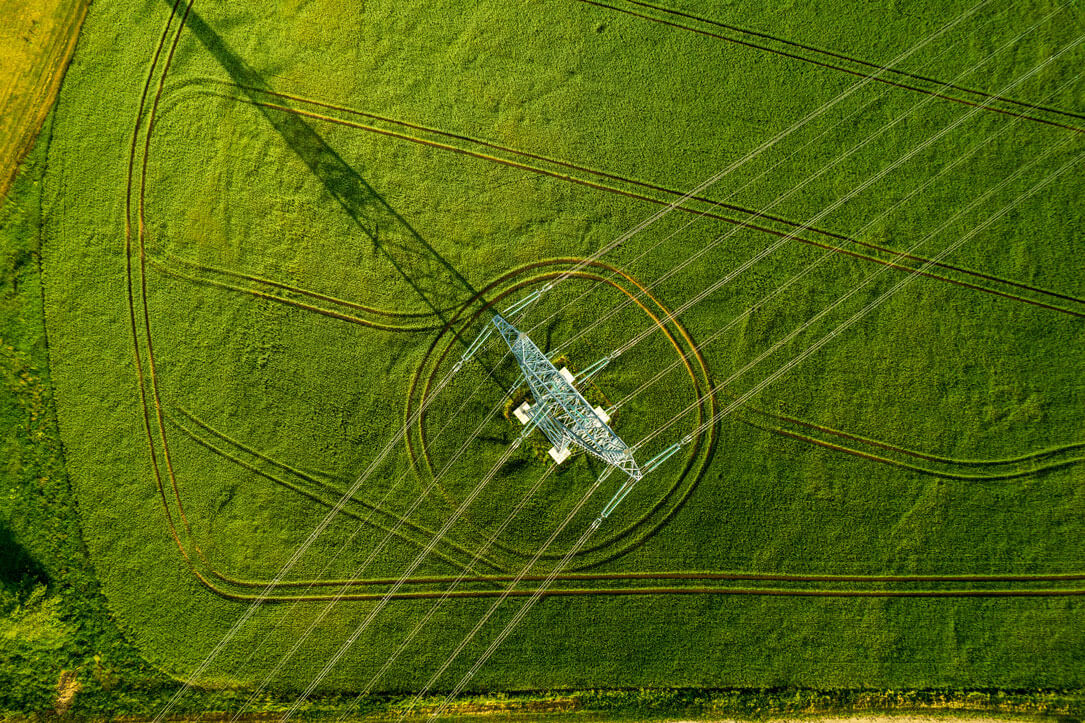
Though an essential tool to modernize electricity infrastructure, building new transmission lines requires permits and large expanses of land suitable for new towers. Established road networks across Europe provide construction and maintenance access to remote areas with relative ease. The problem lies with the difficult and long permit procedure, and a lack of available space; dense urban clusters limit new transmission and distribution developments, halting additions to capacity.
In West African countries, the challenge is reversed. The vastness of the land means that roads and supporting services are scarce. Without these facilities, TSOs and engineers struggle to build infrastructure or maintain existing structures, contributing to 47 per cent of the region’s population lacking electricity access.
Collaborative solutions for power transmission challenges
CIGRE presents the opportunity to share knowledge across member countries to solve common challenges across power transmission and distribution. Particularly relevant for West Africa, conversations centered on advanced technology to improve distribution and facilitate new infrastructure installation. Among the range of technologies enabling greater transmission capacity without building new base towers, advanced conductor cores provide a long-term, low-maintenance option.
With a high strength-to-weight ratio, single and multi-wire carbon fiber conductor cores have a density of 1.6 to 1.8 g/cm3, lighter than its steel alternative of 7.8 g/cm3. The lightweight advantage offers easier installation and means that more conductive aluminum can be stranded on top of the core, doubling transmission capacity in somemost of the cases.
Energy grids are high-stress environments, meaning all assets must be able to withstand high temperatures. Carbon fiber conductor cores have a thermal endurance range roughly of -60°C to 180°C with minimal degradation over time, making them reliable investments for decades of service.
Addressing West Africa’s energy challenges becomes easier when knowledge and expertise is shared. Dr Konstantin O.Papailiou, president of CIGRE, hails Africa’s role as the nexus of the global energy transition. “The landmark gathering of CIGRE West Africa proved Africa is actively establishing international standards,” Dr Papailiou said.
“The continent faces rapidly expanding energy demand, but local expertise is rising to meet the challenge,” he continued. The CIGRE West Africa conference in Dakar showed how the power transmission challenges across the region can be solved by sharing technical expertise, helping to build safe, resilient energy grids for West Africa and beyond.
Hassinen concludes, “We are pleased to see the CIGRE West Africa conference already bringing new experts from Africa into our working groups. They bring valuable regional expertise, and we can share ours in return — that is exactly what CIGRE is all about!”
To learn more about how carbon fibre conductor cores can become a key asset to modern transmission and distribution infrastructure across West Africa, visit our conductor core page.