
Pultrusion
What is pultrusion?
Pultrusion is a continuous composite manufacturing process used to produce lightweight, durable profiles with constant cross-sections. By combining continuous fiber reinforcements with thermosetting resins, the process enables efficient production of composite profiles with consistent quality, repeatable mechanical performance, and dimensional accuracy.
At Exel Composites, we have over 65 years of experience in pultrusion, the core manufacturing technology used to produce our structural profiles, tubes, rods, and application-specific composite solutions for demanding industrial applications. The process supports efficient production while allowing fiber reinforcements, resin systems, and profile geometries to be tailored to specific performance requirements.
Pultruded composites are widely used where high strength, stiffness, weight reduction, corrosion resistance, electrical insulation, dimensional stability, and long-term durability are important considerations. Combined with continuous manufacturing, these characteristics make pultrusion a versatile solution for a wide range of industries and applications.
How the pultrusion process works
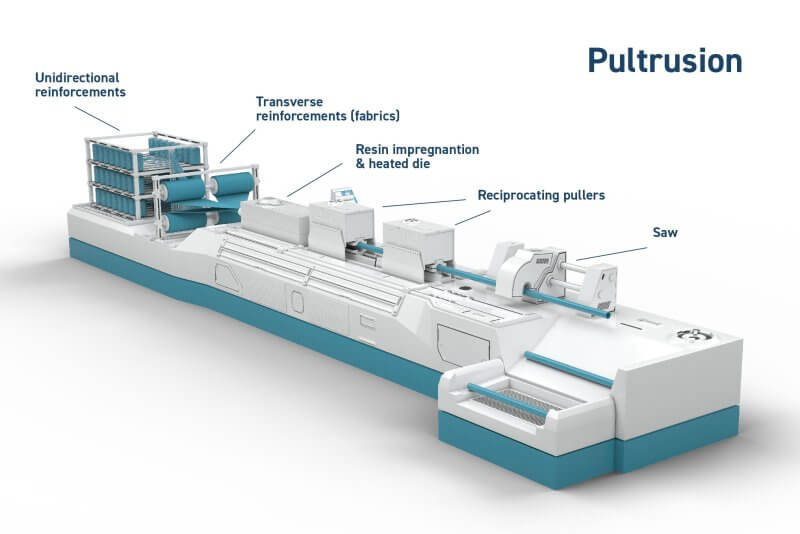
Pultrusion is a continuous manufacturing process that combines fiber reinforcements and resin systems to produce composite profiles or tubes with a constant cross-section. Continuous fibers and other reinforcements are typically pulled through a resin bath, shaped to the required geometry, and cured in a heated die to create a finished composite part. The cured profile is then pulled continuously through the production line and cut to the required length or coiled in longer lengths on spools where geometry permits.
Because reinforcement placement and processing conditions can be controlled throughout production, pultrusion delivers consistent quality, repeatable mechanical performance, and efficient manufacturing across a wide range of profile geometries and production volumes. Different reinforcement materials and resin systems can be combined to meet specific application requirements while maintaining the benefits of continuous manufacturing.
Why engineers choose pultrusion
Pultrusion is widely used because it combines material flexibility with manufacturing efficiency. The process enables the continuous production of composite profiles with consistent dimensions, repeatable mechanical performance, and reliable quality across production volumes. By combining different reinforcement materials, resin systems, and profile geometries, engineers can tailor composite solutions to meet specific application requirements while benefiting from an efficient and scalable manufacturing process.
Key benefits of pultrusion

Consistent quality
Repeatable dimensions and predictable performance across production volumes.

Design flexibility
Fiber, resin, and profile configurations can be tailored to application requirements.

Lightweight structures
High strength-to-weight performance supports product optimization and weight reduction.

Corrosion resistance
Suitable for demanding operating environments and long service life applications.

Thermal and electrical performance
Low thermal conductivity and electrical insulation create additional design opportunities.

Scalable manufacturing
Continuous production supports efficient and repeatable manufacturing including continuous lengths of several kilometers
Materials used in pultrusion
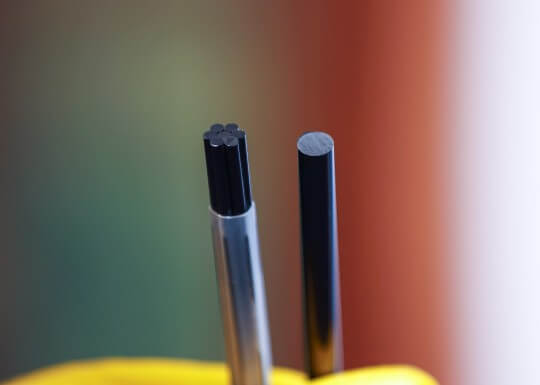
One of the advantages of pultrusion is the ability to combine different reinforcement materials and resin systems to achieve specific performance characteristics. The final properties of a pultruded profile are influenced by the selected materials, profile geometry, and manufacturing process, allowing composite solutions to be tailored to a wide range of application requirements.

Reinforcement fibers
The reinforcement fibers provide much of the strength and stiffness of a pultruded composite profile. Common reinforcement materials include:
- Glass fiber for a balance of performance, durability, and cost-efficiency
- Carbon fiber for high stiffness and lightweight performance
- Aramid fiber where toughness and impact resistance are important
Different fiber types can also be combined to achieve specific performance requirements.
Other fiber types such as basalt, circular glass and natural fibers may be used for specific needs.
For more detailed information on reinforcements, please take a look at our dedicated reinforcements page.
Resin systems
The resin system binds the reinforcement together and contributes properties such as durability, corrosion resistance, thermal performance, and environmental resistance. Common resin systems used in pultrusion include:
- Polyester resins
- Vinyl ester resins
- Epoxy systems
- Bio-based systems
- Specialized performance resins
- Thermoplastic
The appropriate resin system depends on the performance requirements and operating environment of the final application. Our detailed page on resin choice explains further.

Tailoring material performance
By combining different reinforcement materials and resin systems, engineers can optimize pultruded profiles for requirements such as:
- Lightweight structural performance
- Corrosion resistance
- Aesthetics
- Surface finishes and bonding optimisation
- Electrical insulation
- Fire performance
- Radio transparency
- UV resistance
- Thermal performance
- Dimensional stability
- Long service life
This material flexibility is one of the reasons pultrusion is used across a wide range of industries and applications.
Typical pultruded profile geometries
Pultrusion is suited to products with a constant cross-section, including rods, bars, tubes, channels, angles, beams, and custom profile 2D geometries. The profile shape is defined by the heated die and remains consistent throughout the length of the product.

Typical pultruded products and applications
One of the reasons pultrusion is used across so many industries is its versatility. The process can produce lightweight, durable, dimensionally consistent profiles tailored to specific performance requirements.
 Structural profiles
Beams, channels, angles, rods, and custom structural shapes used in industrial and infrastructure applications.
 Composite tubes
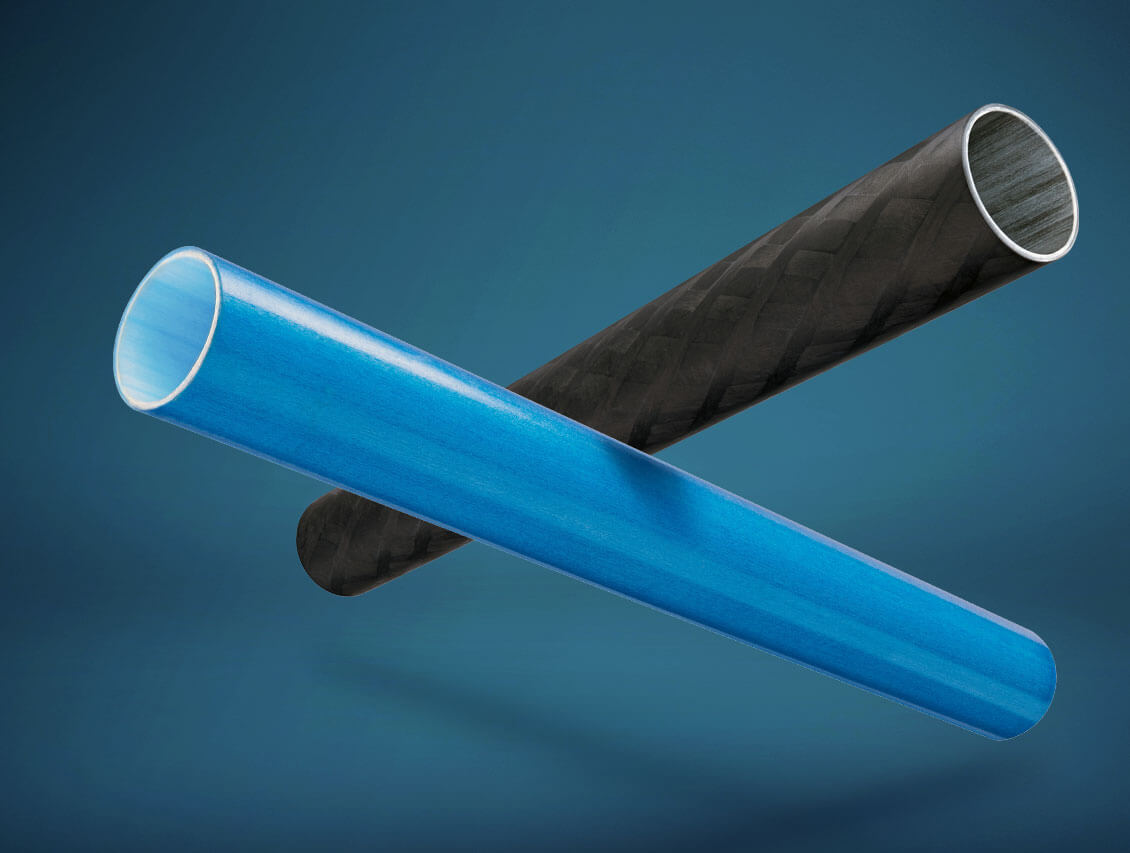
Lightweight tubular profiles designed for applications requiring strength, stiffness, durability, and dimensional consistency.
 Power transmission, electrical and utility applications
Components used where electrical insulation, corrosion resistance, and long-term reliability are important.
 Industrial equipment and machinery
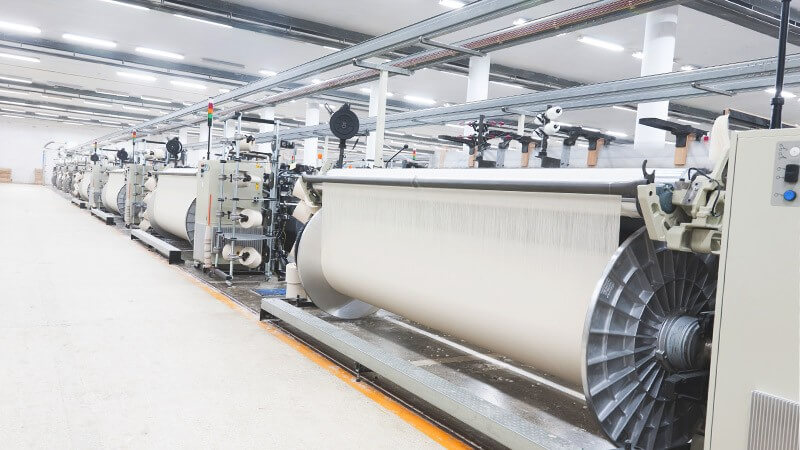
Profiles and structural components used in industrial systems, equipment, and application-specific assemblies.
 Transportation and mobility
Lightweight composite solutions such as vehicle profiles and panels that support performance and efficiency objectives.
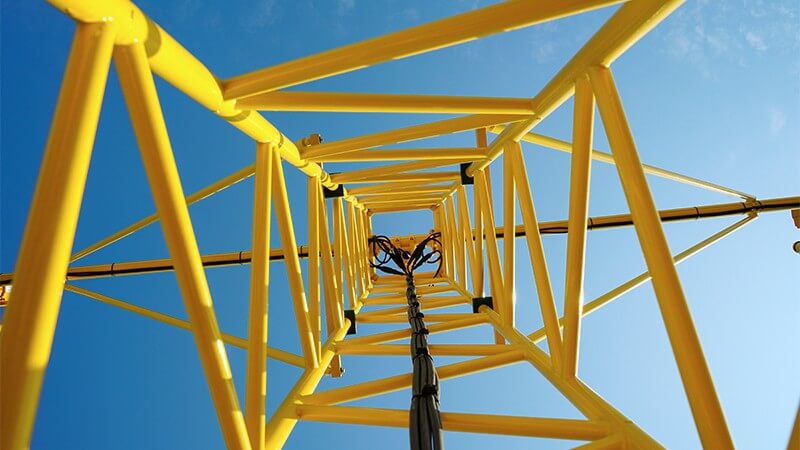 Infrastructure and construction
Profiles used in bridges, walkways, access systems, support structures, and other demanding environments.
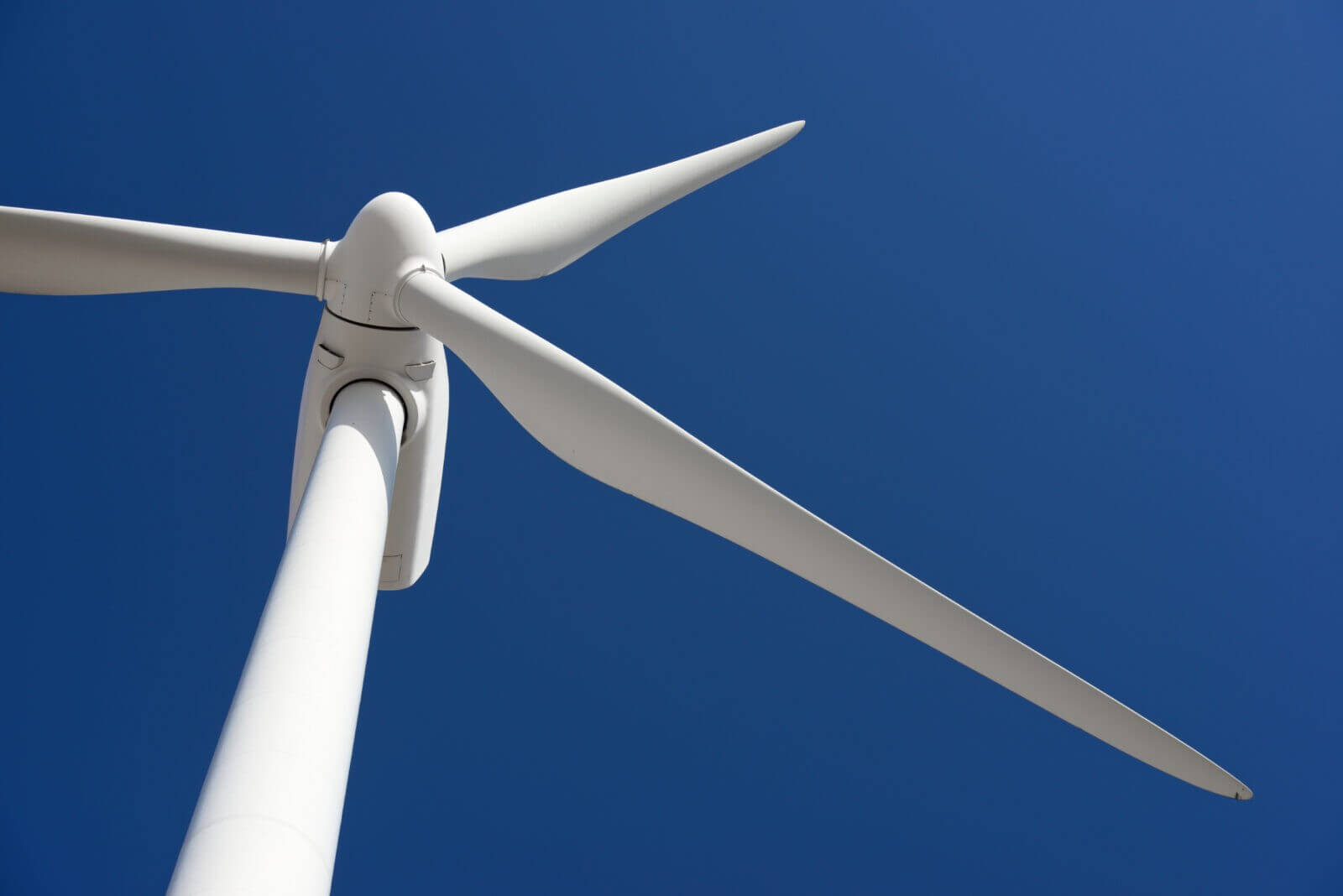 Renewable energy
Profiles used in the construction of wind turbines including carbon planks for spar caps, various glass fiber structural parts as well as structural framing of solar farms.
Frequently asked questions about pultrusion
Q1: What is pultrusion?
Pultrusion is a continuous composite manufacturing process used to produce profiles or tubes with a constant cross-section. Continuous reinforcement fibers are combined with a resin system, shaped, cured in a heated die, and pulled through the production line to create finished composite profiles with consistent quality and repeatable performance.
Q2: What types of products can be manufactured using pultrusion?
Pultrusion is commonly used to manufacture structural profiles, tubes, rods, bars, channels, beams, angles, and custom 2D composite cross-sections. The process is particularly well suited to products that require a consistent geometry along their entire length.
Q3: Why choose pultrusion?
Engineers often choose pultruded composites when applications require a combination of lightweight performance, high strength, high stiffness, low maintenance, corrosion resistance, electrical insulation, dimensional stability, and long service life. The process also enables reinforcement materials and resin systems to be tailored to specific application requirements.
Q4: What materials are used in pultrusion?
Pultruded composites typically consist of reinforcement fibers and resin systems. Common reinforcement fibers include glass fiber, carbon fiber, and aramid fiber, while resin systems may include polyester, vinyl ester, epoxy, and specialized performance resins.
Q5: What are the advantages of pultrusion?
Pultrusion offers several benefits, including:
- Consistent quality and repeatable performance
- Continuous and scalable manufacturing
- Lightweight structures with high strength-to-weight performance
- Corrosion resistance
- Low maintenance
- Long custom lengths and reeled options for suitable profiles
- Electrical insulation properties
- Long-term durability
- Design flexibility through material selection and profile design
Q6: Is pultrusion suitable for high-volume production?
Yes. Because pultrusion is a continuous manufacturing process, it is particularly well suited to applications that require repeatable quality across both short and long production runs. Once a profile has been designed and validated, the same manufacturing principles can be applied consistently at production scale.
Q7: What is the difference between pultrusion and pull-winding?
Both are continuous composite manufacturing technologies. Pultrusion is typically used to produce profiles with constant cross-sections, while pull-winding introduces additional reinforcement orientations and is particularly suited to tubular products that require enhanced hoop strength and more tailored mechanical performance.
Q8: Which industries use pultruded composites?
Pultruded composites are used across a wide range of industries, including infrastructure, transportation, power transmission, electrical distribution, industrial equipment, and other applications where lightweight structures, high strength, high stiffness, corrosion resistance, low maintenance, durability, or electrical insulation are important considerations.
Q9: How can I determine if pultrusion is suitable for my application?
The suitability of pultrusion depends on factors such as product geometry, performance requirements, operating environment, and production volumes. Early collaboration with composite design and manufacturing specialists can help identify the most appropriate material configuration and manufacturing approach for a specific application.
Need support with a pultrusion project?
Whether you are developing a new composite profile, replacing traditional materials, or scaling an existing design, Exel Composites can help evaluate the most suitable materials, profile geometry, and manufacturing approach for your application.