The International Energy Agency expects electricity demand to rise 3.5 per cent by 2030, driven by industrial electrification and data center construction booms. To keep up with growing requirements, transmission system operators (TSO) must ensure power is delivered reliably across current infrastructure. Here, Heini Kloster, our product manager for conductor cores, explores how polymeric matrix composite (PMC) multi-wire conductor cores can support energy demand without requiring new infrastructure and the studies which showcase their resilience.
In the quest for a more sustainable and efficient power grid, technologies are being developed to support the on-going energy transition and grid modernization, such as the use of PMC cores in overhead line (OHL) conductors. These cores offer a higher strength-to-weight ratio and lower thermal expansion rate than traditional steel-cores used in aluminum conductor steel reinforced (ACSR) conductors. This way they increase transmission capacity and reduce energy losses, helping grids operate more efficiently without costly upgrades.
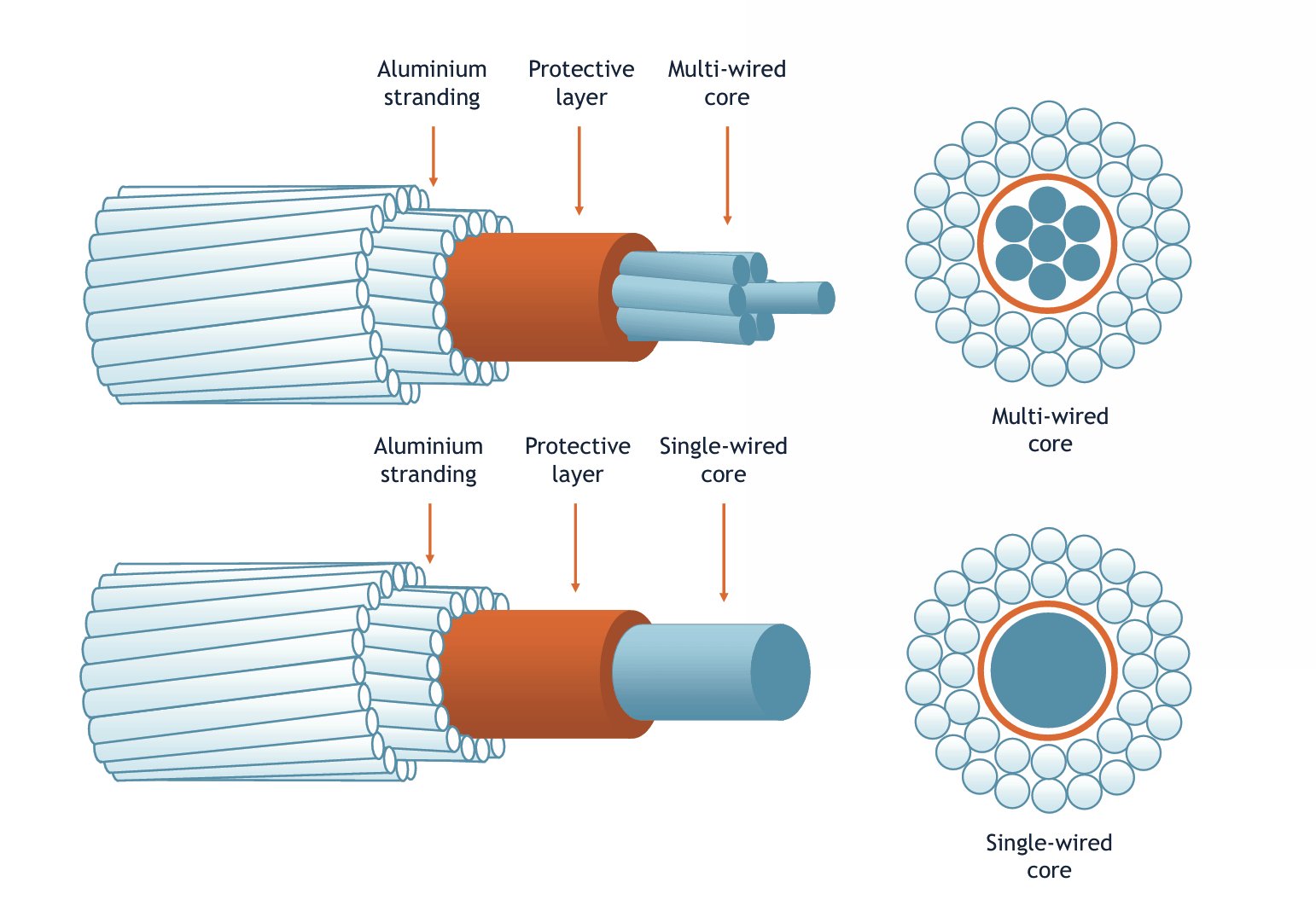
PMC conductor cores come in two main types: single-wire and multi-wire. The first generation single-wire core often uses a hybrid structure, a carbon fiber core coated with glass fiber. While these have been on the market for some time, they are relatively inflexible and more prone to damage if mishandled. That’s why the second-generation multi-wire cores have several small rods stranded together. This design provides greater flexibility and safety, as no single wire carries the entire load of the line. Its flexibility closely matches that of traditional ACSR
Testing real-world resilience
The multi-wire structure of the conductor core ensures that, even if there is an individual damaged strand inside the core, the conductor and the electrical line still stay intact. This event was the object of a study published by CIGRE in May 2025, carried out in collaboration with Exel and De Angeli Prodotti titled, “Influence of Broken Wire on Multistrand Core”. The research, commissioned by Belgium’s transmission system operator ELIA, examined how individual wire damage affects overall conductor performance.
To simulate real-world defects, a single wire was intentionally damaged using transverse compression, reducing its tensile strength by around 30 per cent. 6+1 wires were then stranded to form a multi-wire core, which was put through tensile testing to break the pre-damaged wire and see how it affects the rest of the core. The results clearly demonstrate that, even with a broken wire, the core maintained strength above the specified minimum, and no damage occurred to the surrounding wires. This demonstrates the high residual strength and reliability of multi-wire PMC cores in practical use.
Another study published by CIGRE late last year tested the resilience of conductor cores in real-world scenarios. Titled “From Single to Multistrand Carbon Core Conductors: A Deep Dive into the advanced PMC HTLS Conductors”, the study focused on the flexibility of single- and multi-wire composite cores. To stimulate damage during installation, the multi-wire core was bent on a very tight radius. Tensile strength remained very high even after the core was bent over safety limits, showing that the bending radius of a multi-wire core is well below the minimum set for the ACSR, making the conductor behavior more dependent on the overall conductor structure than of just the core.
Implications for the power grid
These studies demonstrate that PMC multi-wire cores maintain their structural integrity even under rough handling or if individual strands are damaged. This reliability ensures safe, consistent performance when deployed in overhead lines, giving TSOs confidence in using these next-generation conductors.
The research also provides valuable insights into the mechanical behavior of multi-wire PMC cores, reinforcing their robustness and suitability for modern grids. We, and the conductor manufacturers we work with, are eager to share these findings with the industry and continue supporting TSOs in strengthening transmission networks while meeting growing demand efficiently.
As electricity demands rise and grids are pushed to their limits and transmission operators are tasked with finding solutions, PMC multi-wire core conductors offer a proven, resilient option. With high strength, flexibility, and the ability to retain performance even when individual strands are damaged, these next-generation conductors give operators confidence in modern transmission networks.
To learn more about how conductor cores are modernizing the electrical grid, read the finding from Montreal here and visit our conductor cores web page to book a meeting with one of our experts.