
Working with composites | Machining, bonding, installation and repair
Working with composites is straightforward when the material is handled with the right fabrication and assembly practices. At Exel Composites, continuous manufacturing methods such as pultrusion and pull-winding produce consistent profiles that can be cut, drilled, joined and installed using familiar workshop methods, while still benefiting from composite-specific design and handling know-how.
From machining and bonding to field handling and maintenance, the goal is the same: protect performance while keeping fabrication practical. Composite profiles do not need to be treated as difficult materials, but they do reward good support, sensible joint design, dust control and protection of exposed surfaces. In practice, this means treating each fabrication step as part of the final structure: how a profile is cut, how a hole is drilled, how an edge is sealed and how a joint is designed all influence long-term performance.
For engineers, fabricators and installation teams, the most important mindset shift is that composites are not simply “metal alternatives”. Their fibre-reinforced structure gives them excellent durability and design flexibility, but it also means that local stresses, surface preparation, drilled holes and exposed cut edges should be handled intentionally. Good workmanship does not need to be complicated; it just needs to be consistent.
Machining and finishing composites
Composite profiles can be cut, drilled and machined with many of the same methods used for wood, aluminium and other light engineering materials.
Cutting composite profiles
For cutting, the objective is to make a clean, controlled cut without dragging fibres, overheating the edge or allowing the profile to vibrate. Good clamping and counter-support help create a clean cut. Where repeatability matters, the cutting process should be set up so that cutting speed, feed pressure, support and tool condition stay consistent from part to part.
Drilling composite profiles
For drilling, holes should be made with enough support to reduce breakout around the exit side. A backing material, jig or counter-support can make a noticeable difference, particularly where the hole will later carry load through a bolt, screw or other fastener. Any standard high-speed drill bit will be suitable for low-volume production. For large quantities, either cobalt bits or carbide-tipped drills are recommended. Drilling speeds should take both hole size and thickness into account.
Surface preparation before bonding or coating
Before bonding, coating or sealing, fabricated surfaces should be prepared carefully. The surface should be keyed where needed, cleaned and allowed to dry before the next process is applied. A well-prepared surface gives adhesives, sealants and coatings a better chance to perform as intended.
Joining and bonding composites
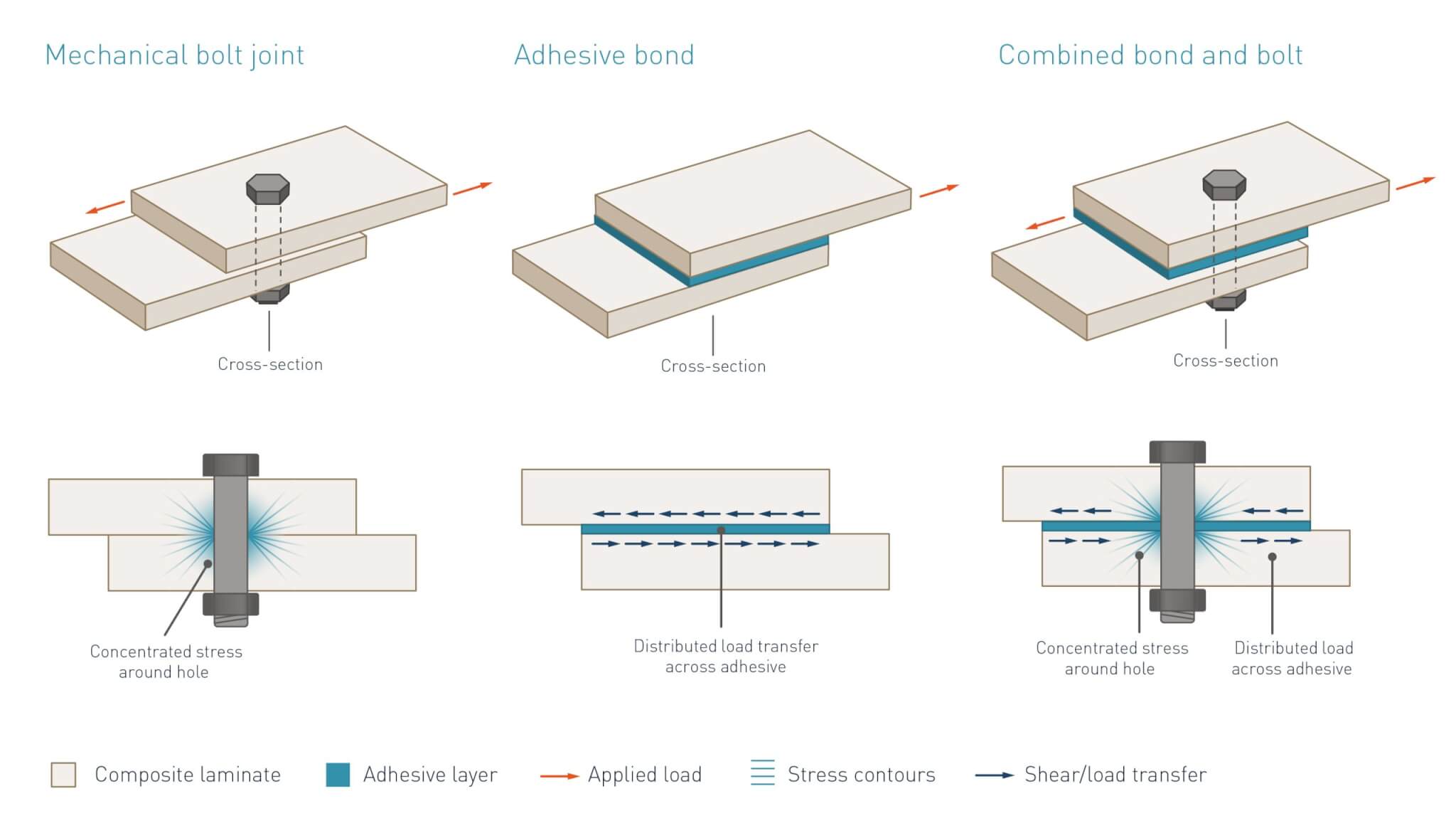
Composite profiles can be joined with mechanical fasteners, adhesives or a combination of both. The right choice depends on the load case, service environment and the materials being joined,
Mechanical fastening
Mechanical fastening is a practical option. Large washers, plates, inserts or other load-spreading details can help distribute force over a wider area.
Drilled holes should also be treated as engineered details. Hole spacing, edge distance and the direction of the applied load influence how the joint behaves. Where the structure will face moisture, chemicals or outdoor exposure, drilled holes and cut edges should be protected as required by the service environment.
Adhesive bonding
Adhesive bonding can be valuable because it distributes load over a larger surface area than a point fastener. Instead of concentrating force at a hole, a bonded joint can spread load across the overlap or contact area. This can improve fatigue behaviour, reduce local stress concentrations and help preserve the integrity of the profile. the bond area, adhesive type, surface condition, cure conditions and expected service environment all need to be considered.
Combined bond-and-bolt joints
For many applications, bond + bolt is the most robust approach. Adhesive bonding helps distribute load more evenly across the joint area, while mechanical fastening adds positional security and assembly confidence. The fasteners can hold components in position during assembly and provide a visible mechanical safeguard, while the adhesive supports load distribution and can help reduce movement at the interface.
Joining composites to metal
When joining composites to metals, the interface should be designed with mixed-material behaviour in mind. Thermal expansion should be considered in the design.
Joint design checklist
- Consider load path before selecting a joining method
- Avoid concentrating loads into unsupported areas
- Account for environmental exposure
- Review thermal expansion in mixed-material joints
- Protect exposed holes and cut edges where necessary

Installation and field handling of composite profiles
Composite profiles are well suited to practical field installation because they are lightweight, easy to handle and often simple to adjust on site. Portable tools can be used for trimming, drilling and fitting, which helps reduce installation complexity while preserving flexibility at the point of assembly.
The same fabrication rules still apply on site as in the workshop. Support the part during cutting, control dust and avoid unnecessary surface damage.
Handling and transport
Handling is usually easier than with many metal alternatives because composite profiles often have a lower weight for comparable structural performance.
Installation and lifecycle performance
Composite structures often require only limited maintenance throughout their service life. That makes careful installation especially valuable: a well-supported cut, properly prepared joint and protected edge can reduce the chance of avoidable maintenance later. After installation, regular inspection of joints, attachment points and exposed fabricated surfaces can help maintain long-term performance.
Installation checklist
- Support long profiles during handling
- Avoid unnecessary impacts and abrasion
- Protect exposed surfaces where required
- Inspect joints after installation
- Treat on-site modifications as part of the final structure
Maintenance and repair of composites
One of the core lifecycle benefits of composite profiles is low maintenance. In many applications, composites are selected because they do not corrode like metals and can deliver long-term durability with less routine intervention. This does not mean they should be ignored in service; it means maintenance is usually more focused on inspection, cleaning and local details than on corrosion control or frequent replacement.
Cleaning and environmental exposure
Cleaning should be matched to the operating environment. In many applications, normal cleaning is sufficient to remove dirt, deposits or surface contamination.
Frequently asked questions about working with composites
Q1: Can composites be cut and drilled with normal workshop tools?
Yes. Composite profiles can usually be cut, drilled and machined with familiar workshop tools when they are properly supported and processed with suitable dust control. For repeated production work, tooling and process control become more important because glass fibres and other reinforcements can be abrasive to tools.
Q2: Do composites create dust during machining?
Yes. Cutting, drilling and sanding can create fine abrasive dust. Extraction, PPE and regular cleaning should be part of the process, especially in workshop or production environments.
Q3: Do cut ends and drilled holes need sealing?
Q4: What is the best way to join composite profiles?
Q5: Why use bond + bolt instead of only one joining method?
Q6: What should be considered when fastening composite profiles?
Q7: What should be considered when joining composites to metal?
Q8: Can composite profiles be adjusted on site?
Q9: Are composites high-maintenance in service?
Q10: How should minor damage be approached?