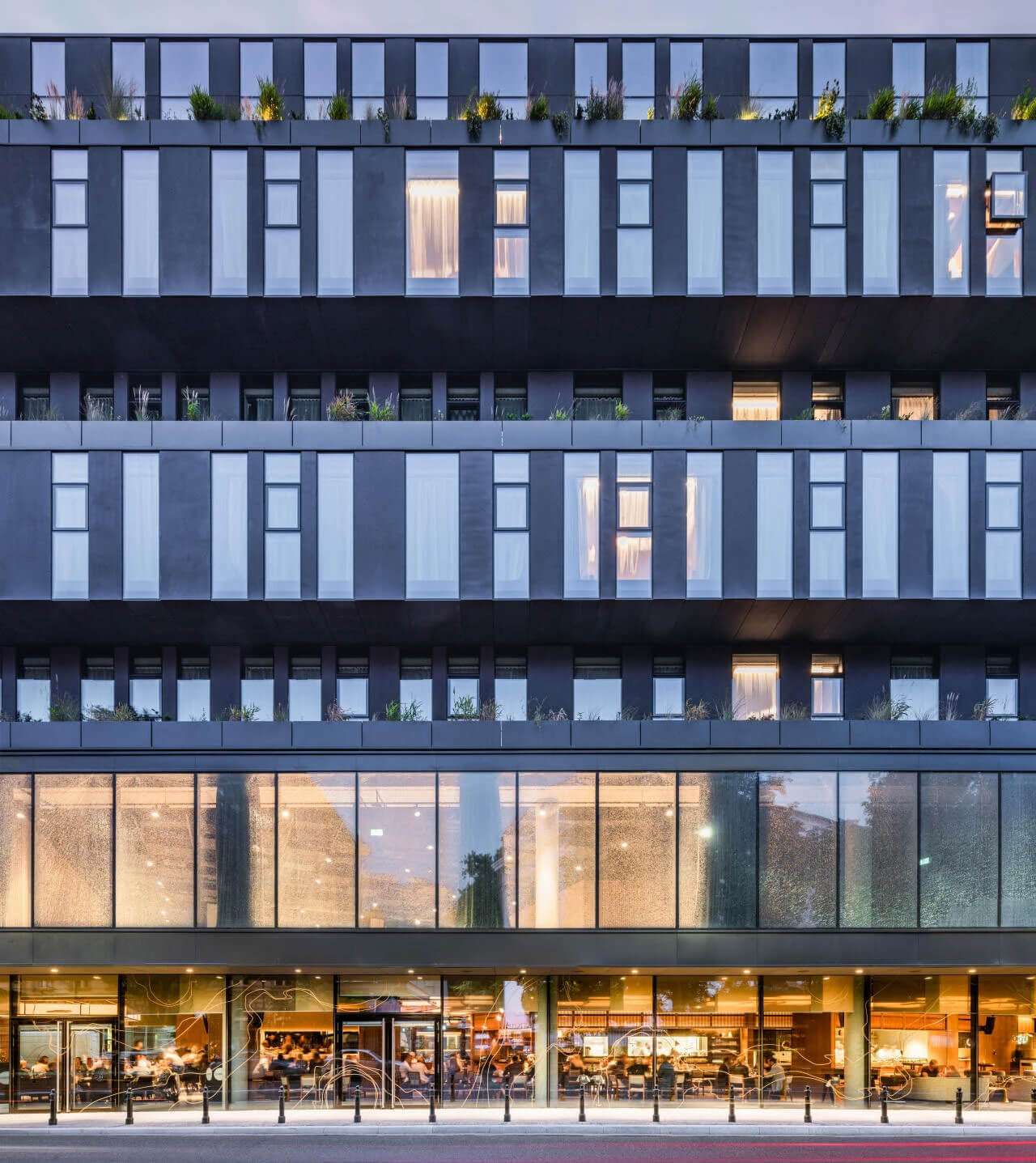
Case Aluprof: How composite profiles improve stability in panoramic sliding window systems
Architects are continually tasked with creating eye-catching designs across a variety of infrastructure. Trends for 2026 point towards minimalism and sustainability, challenging designers to develop seamless, eco-friendly features with less visible mechanics. Traditional materials are pushed to the limit to meet these demands, with thermal performance and stability as crucial as aesthetics. When developing a high-end window system, Aluprof partnered with Exel Composites to combine traditional materials with structural composite profiles, ensuring high performance while ensuring a minimalist appearance.
Aluprof, a prominent European aluminum windows and doors specialist, creates and supplies systems for commercial and residential construction. With over 70 years of expertise, the company has developed a wide range of architectural solutions that are designed to meet the evolving expectations of the industry.
The growing preference for minimalist design is driving the use of sleek façades, sliding systems, and expansive glazing, creating a seamless connection between indoor and outdoor spaces while enhancing the overall user experience. In response to the increasing demand for minimalist architecture, Aluprof has developed a range of premium sliding window systems tailored for high-end applications.
Historically, these systems relied solely on aluminum due to its high strength-to-weight ratio and durability. However, as sliding systems have become larger, sleeker, conventional materials cannot reach the required standards alone.
When developing the MB Skyline Type–R, a panoramic sliding system, Aluprof began to encounter weaknesses with traditional materials. “The MB Skyline system includes large glass panels, reaching up to 1,200 kg each,” explained Michal Marcinowski, sales and business development leader at Aluprof. “Aluminum alone could not meet the performance requirements under this weight.”
Aluminum joints showed instability, struggling to withstand the dimensions of the glass panels. The material also demonstrated weak thermal performance, losing heat at critical joints. To compensate for these vulnerabilities, additional processing and material would have been required to maintain performance level. Increasing the profile thickness was not an option, as maintaining the minimalist aesthetic was vital. Surface treatments were considered but avoided due to the potential effects on overall system performance.
“Achieving both aesthetic and performance targets with aluminum alone was not possible. It became clear we had to explore alternative materials,” said Marcinowski.
This dilemma led Aluprof to composites. Created with reinforcing fibers and resin, composites materials can be engineered to deliver high strength, low weight, and improved thermal performance. Unlike traditional materials, composites can provide required rigidity and dimensional stability without increasing profile thickness.
Exel’s development and R&D expertise played a key role in creating a composite profile suited to the requirements of the Skyline Type-R system. Working closely with the customer, Exel tailored the profile’s material characteristics to combine thermal performance, structural strength, and long-term durability in one solution, while leveraging the company’s continuous manufacturing expertise in pultrusion and pull-winding.
Aluprof’s visit to Exel’s Kapfenberg factory in Austria further strengthened the collaboration by demonstrating Exel’s production capabilities, quality controls, and technical know-how first-hand. As Exel’s Polish sales representative Lukasz Karczmarski explains: “The factory visit helped the customer see the level of expertise behind the solution and gave them confidence that Exel was not just a supplier, but a true development partner.”
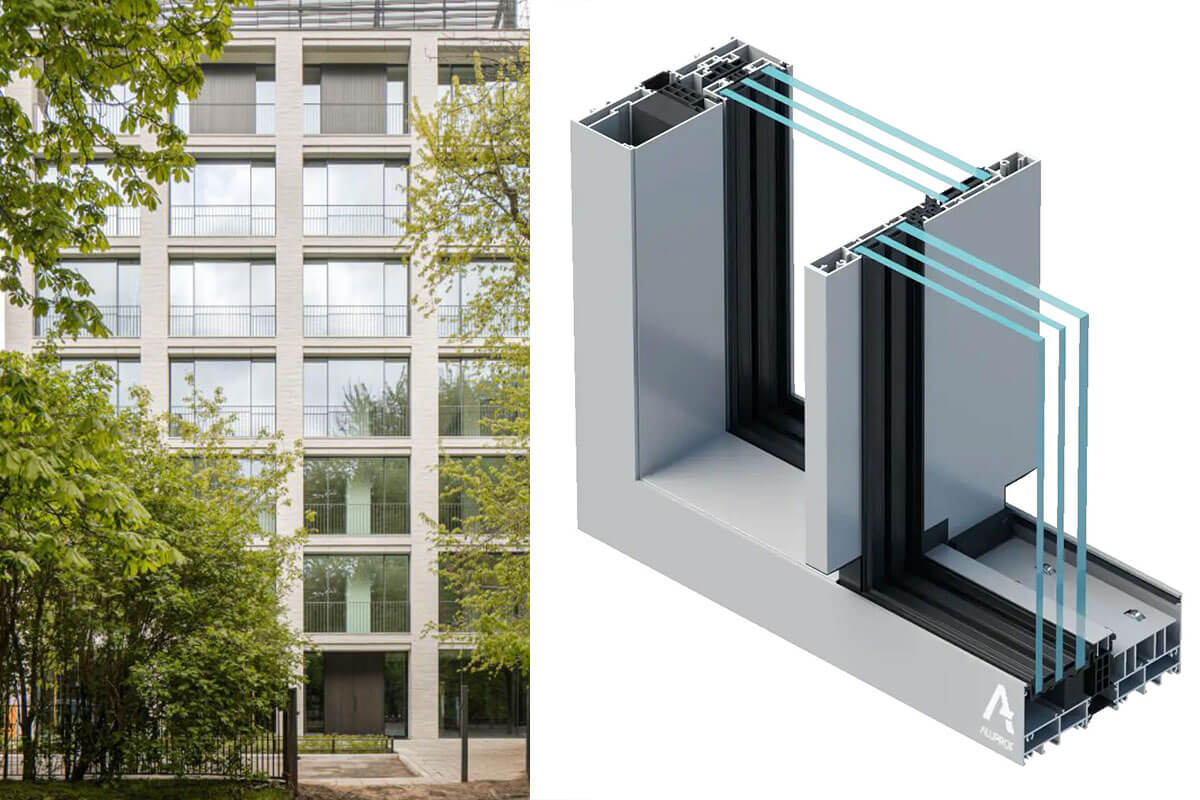
Collaboration from design to end-product
Working closely from the early stages of development, Exel supported Aluprof with design and material consultancy, helping to optimize the composite profile to meet specific requirements of the system. Composite materials were introduced to complement the traditional aluminum system, working together to maximize overall performance. Rather than replacing aluminum entirely, composites were strategically integrated into the system to overcome the material limitations that aluminum alone could not resolve.
“The integration of composites significantly improved thermal performance across the system. Where aluminum alone caused heat to escape, composites created a barrier at critical junctions and reduced heat transfer through the frame,” explained Guillaume Klein, business development manager at Exel Composites.
“When bonded with the glass, the system behaves as a single structural element, ensuring stability even under the extreme weight of the panels,” Marcinowski added. “The unified structure improves dimensional precision and allows tight tolerance to be maintained, which is essential for the smooth operation of the sliding system. Maintaining these tight tolerances was essential for our engineering team, as even small variations in geometry could affect the movement and reliability of the system.”
Composites also offer a high strength-to-weight ratio and a lower density compared to aluminum, helping to reduce the overall weight. The system ensures stability for the sliding system as well as improving handling and installation.
Beyond structural and thermal performance, composite profiles can also extend system lifespan. Their inherent corrosion resistance eliminates the need for additional surface treatments, simplifying manufacture while reducing the risk of compromised performance.
Over a longer service life, the durability and dimensional stability of composites help reduce ongoing maintenance requirements. With smaller expansion and contraction cycles between day and night, as well as across seasonal temperature changes, the system remains more reliable and requires fewer interventions throughout its lifecycle.
Looking ahead with composites
The MB Skyline Type-R demonstrates how composite materials can deliver structural and thermal performance alongside aesthetics requirements. By improving and complementing traditional aluminum systems, composites enabled Aluprof to achieve large-scale minimalist designs. The system has been increasingly successful in markets across Europe, supporting growth in high-end architectural applications.
Since the collaboration, Aluprof has developed valuable in-house knowledge of composite profiles and has begun researching how they can be integrated into other product lines. “Our research and development team are continuously designing new systems and now we can utilise the benefits of composites in windows, doors, and facade products,” said Marcinowski.
As architectural trends continue to evolve, balancing performance with aesthetics will remain a key challenge. The development in simple, minimalist designs expands the capability of architects, pushing traditional materials to extremes. The MB Skyline Type-R highlights how hybrid material solutions can meet these demands, enabling innovative designs without compromise.
To learn more about our solutions for window and door applications, visit here.