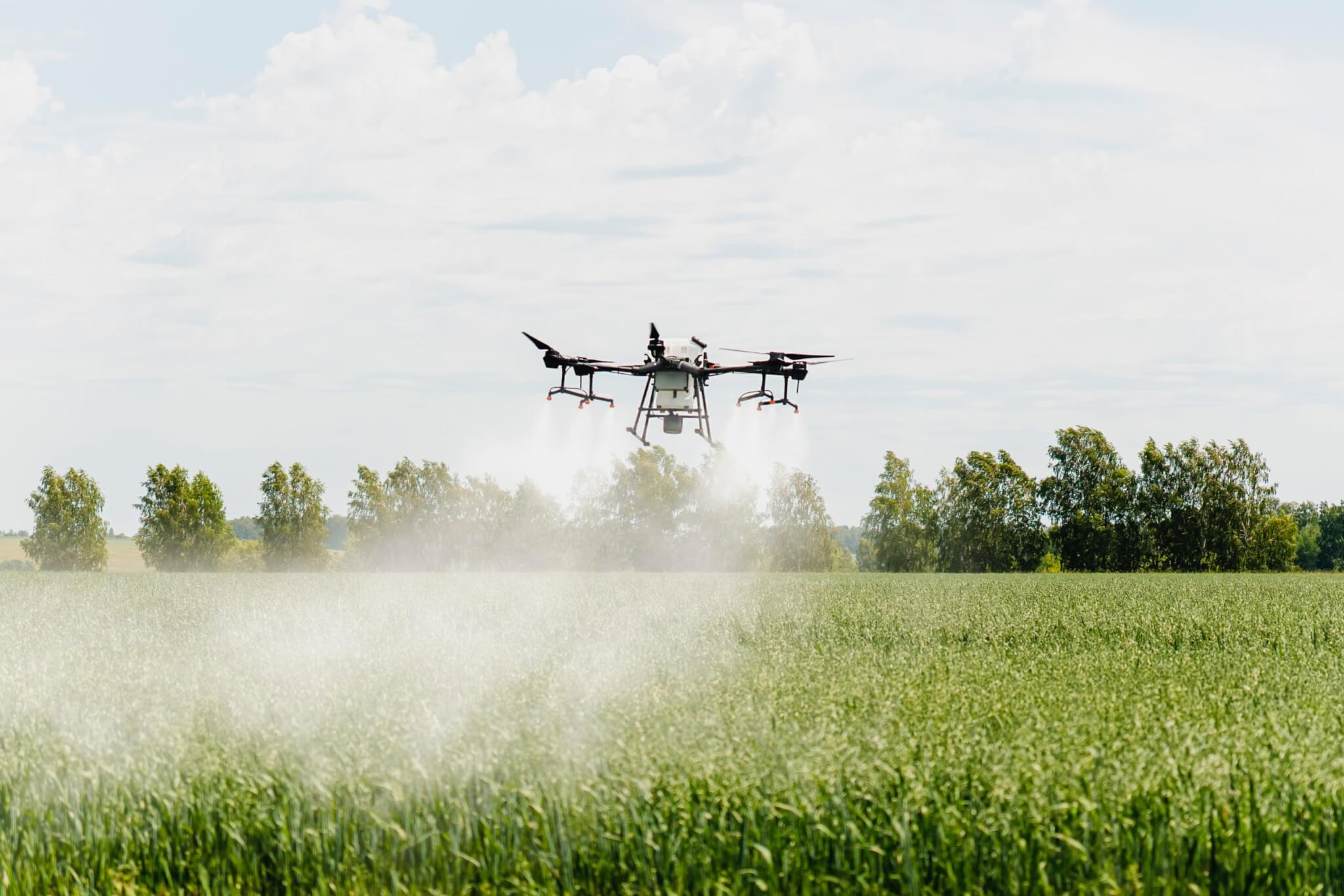
Composite tubes and profiles for drones and Unmanned Aerial Vehicles (UAVs)
Lightweight structures. Tailored performance. Consistent production.
Drone and UAV structures need to do more with less. Every gram used in the airframe is weight that cannot be allocated to batteries, sensors or payload, yet reducing structural mass cannot come at the expense of stiffness, strength or durability.
At Exel Composites, we design and manufacture composite tubes and profiles for drones and UAVs, using carbon fiber, glass fiber and hybrid constructions. Through our continuous pultrusion and pull-winding technologies, we can tailor fiber architecture, dimensions and material combinations around the loading and functional requirements of the application.
From lightweight airframe booms and wing structures to lattice systems and other structural components, our approach combines material and application engineering with repeatable industrial production.
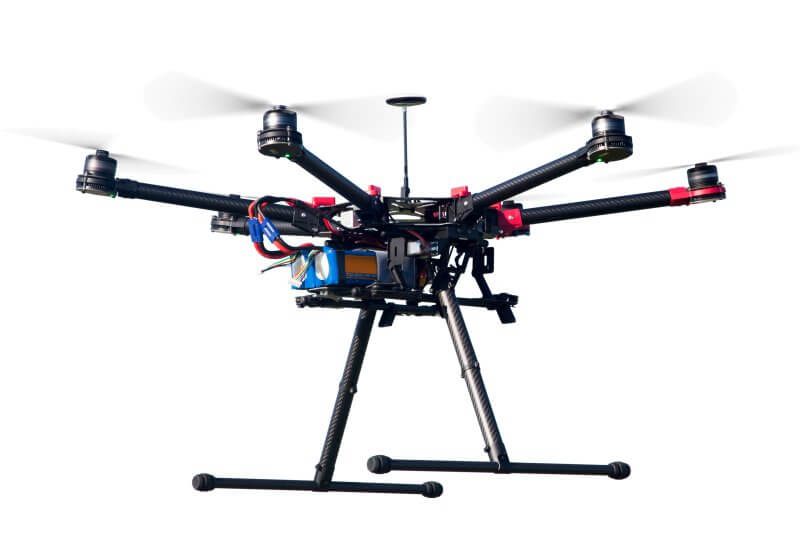
Why use composites in drones and UAVs?
For a drone designer, lightweighting is rarely the only objective. Structural components may need to withstand combinations of bending, vibration, torsion and transverse loading while keeping mass to a minimum. Different parts of the aircraft may also have very different structural and functional requirements.
Composite materials give engineers the ability to design around these demands rather than simply selecting a material with predetermined properties. Fiber type, fiber orientation, tube diameter, profile geometry, wall thickness and resin system can be adapted to influence the behavior of the finished component.
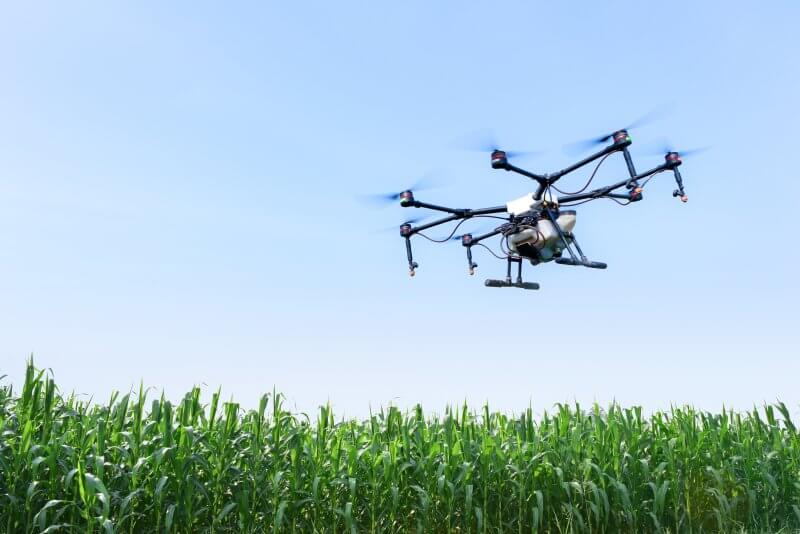
Key benefits of composite tubes and profiles for drones
High stiffness-to-weight ratio
Carbon fiber composites provide high stiffness at low weight, helping designers minimize structural deflection without adding unnecessary mass.
Optimized weight and payload
Reducing structural mass leaves more of the drone’s weight budget available for components such as batteries, sensors and payloads.
Tailored strength and stiffness
Fiber orientation, reinforcement type, geometry and wall thickness can be engineered around different loading conditions.
Torsional and transverse performance
Pull-winding combines longitudinal fibers with controlled angled reinforcement, allowing additional hoop strength and torsional and transverse performance to be designed into the tube.
RF-transparent options
Where electrical conductivity is undesirable around communication systems, glass fiber can provide radio-frequency transparency. Hybrid constructions allow carbon and glass fibers to be combined according to different structural and functional requirements.
Consistent quality at scale
Continuous manufacturing enables application-specific designs to be reproduced consistently across production volumes.
Composite structures engineered around your drone
There is no universal composite solution for a drone structure. An airframe boom may need to handle forces generated by motors, propellers, payloads or tail assemblies. Wing members and lattice structures can experience different combinations of bending, torsional and vibration loads. The composite structure can therefore be designed around the loads the individual component is expected to experience.
By adjusting fiber type, fiber orientation, geometry and wall thickness, Exel’s engineers can develop a profile around specific stiffness, strength, weight and functional requirements.
Carbon fiber and composite components for drone and UAV applications
- Airframe booms
- Structural tubes
- Wing structures
- Lattice structures and masts
- VTOL structures
- FPV frame kit
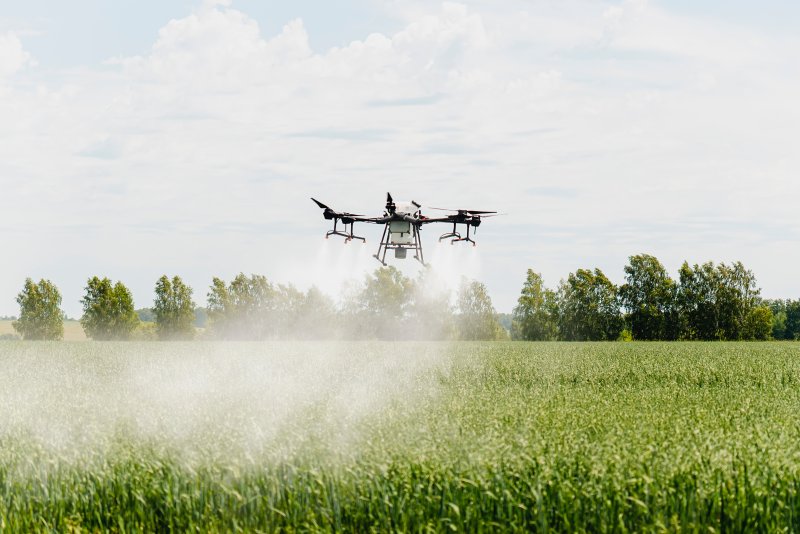
High-performance carbon fiber tubes for drones
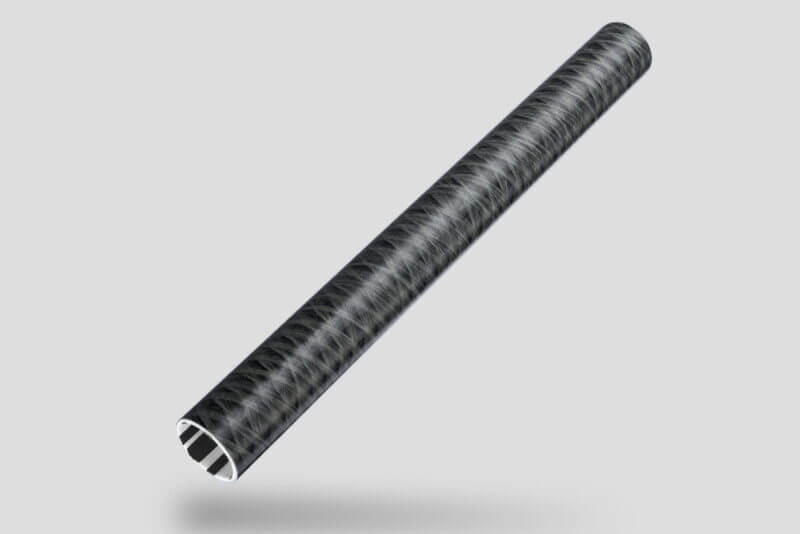
Exel’s pull-wound carbon fiber tubes combine high stiffness with low weight for demanding drone and carbon fiber UAV structures. Our general carbon fiber tube specifications cover outer diameters of 4–400 mm (0.16–16 in), with typical wall thicknesses of 1.0–1.5 mm and a minimum wall thickness of 0.50 mm. These specifications also include stiffness of 125–175 GPa and a density of 1.55 g/cm³. Tube dimensions and fiber construction can be tailored to the application. Final properties depend on the selected materials and design.
Available design variables include:
- Tube diameter
- Wall thickness
- Fiber type
- Fiber architecture
- Resin
- Surface pattern
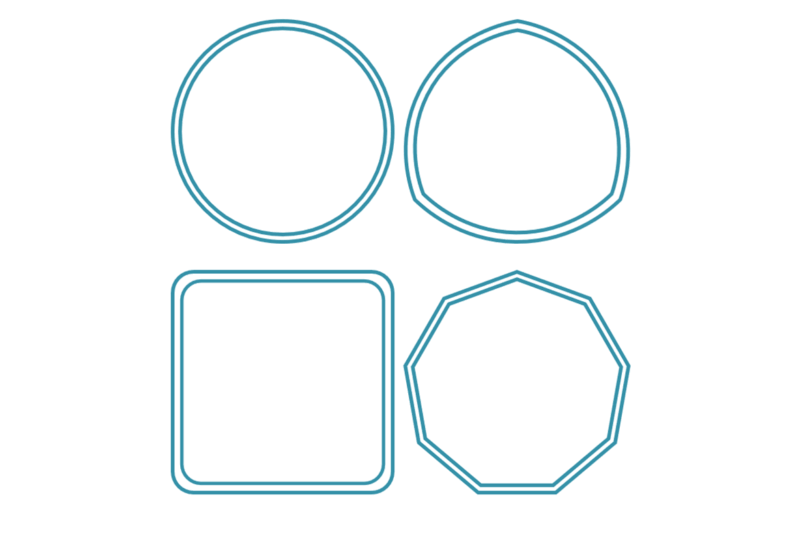
- Geometry
Thin-walled composite tubes for lightweight UAV structures
For weight-sensitive UAV applications, simply making a conventional structure thinner is not enough. The structure still has to carry the loads encountered in operation.
With composites, reinforcement can be oriented according to where performance is required. Longitudinal fibers provide stiffness and strength along the tube, while fibers in other orientations can support transverse and torsional loads. This allows engineers to use material strategically rather than simply increasing wall thickness.
For drone designers, this creates an opportunity to optimize structural mass while maintaining the mechanical behavior required by the application.
Why pull-winding is particularly suited to demanding drone structures
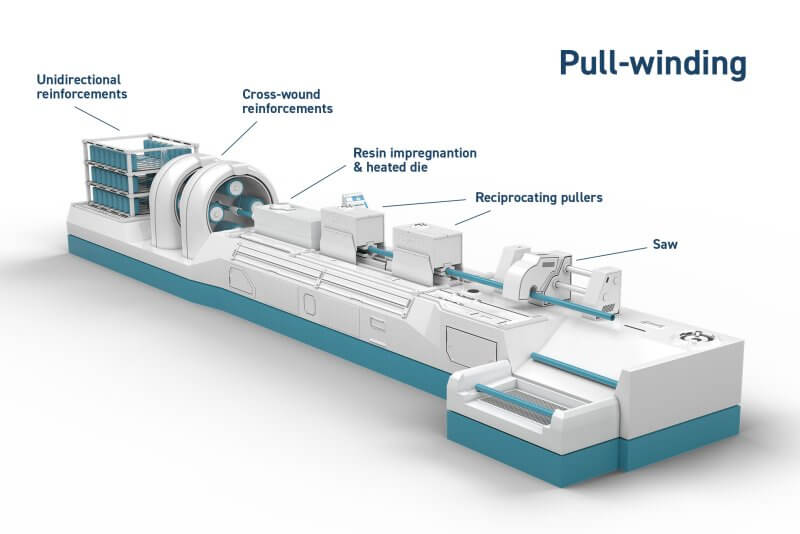
Pull-winding combines the benefits of pultrusion with controlled helical reinforcement.
Longitudinal fibers provide axial stiffness and efficient load transfer along the profile. Additional fibers are wound at controlled angles before the composite is continuously cured. Adjusting factors such as winding angle, fiber volume, reinforcement type and resin formulation allows the structure to be tailored to different loading requirements.
For drone structures, this can be particularly valuable where components must accommodate combinations of axial, transverse and torsional loads while minimizing structural weight.
Unlike traditional manufacturing methods such as prepreg and filament winding, Exel’s continuous processes can reproduce the defined construction at an industrial scale with consistent geometry and material properties.
Carbon, glass or hybrid: material where you need it
Not every part of a drone necessarily has the same requirements.
Carbon fiber offers high stiffness and strength at low weight and is suited to high-performance lightweight structures. Glass fiber provides a cost-effective lightweight option with insulating properties. Hybrid structures combine different reinforcement types, allowing properties to be balanced within a single composite solution.
This becomes particularly important around communication systems. Carbon fiber is electrically conductive, while glass fiber can provide RF transparency. A hybrid design can therefore use carbon fiber where stiffness is required and glass fiber where radio-frequency transmission or other functional requirements take priority. Get in touch with our team to learn about the possibilities.


From prototype to scalable composite manufacturing for drones and UAVs
A high-performing prototype is only valuable commercially if its performance can be reproduced.
Exel produces composite profiles continuously using pultrusion and pull-winding. Profiles are manufactured continuously and cut to the required length, enabling stable production output while reducing manual intervention compared with more labor-intensive batch production approaches.
For drone and UAV manufacturers, this means the same approach can support the transition from development toward repeatable production.
Composite tubes in action: UAV structures with ANT-X
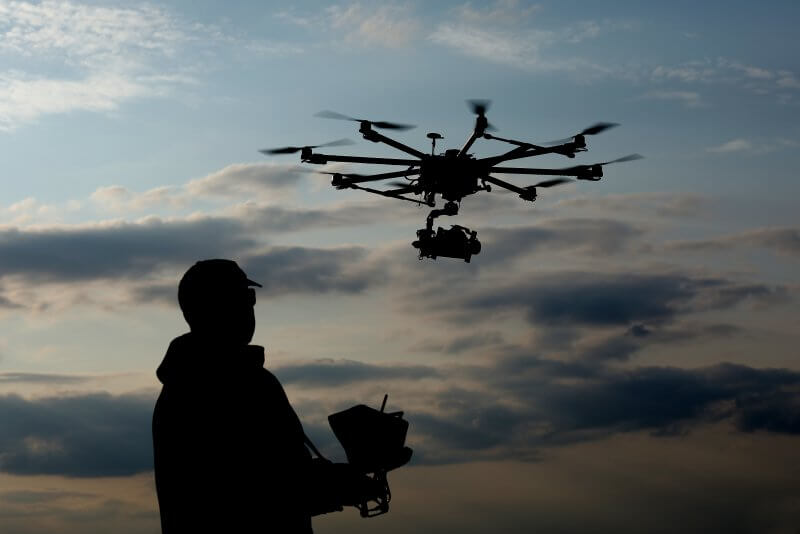
ANT-X, a spin-off from Politecnico di Milano, develops custom drones for research and industrial applications. The company needed structural composite components with consistent mechanical properties and reliable quality while supporting both prototyping and production.
Exel initially supplied standard carbon fiber tubes for ANT-X’s testing program before the collaboration developed into a more specialized approach using modular tubes produced with pultrusion and pull-winding. The resulting consistency gave ANT-X a reliable foundation for testing and producing specialized UAV structures, including the ARIES drone used for powerline inspection. Read the full story here.

Why Exel Composites for UAV applications?
A composite tube is more than a material choice. Its performance depends on how its materials, reinforcement architecture, geometry and manufacturing process work together.
Exel combines:
- Expertise in pultrusion and pull-winding
- Carbon, glass and hybrid composite capabilities
- Application engineering
- Prototyping and testing
- Tailored fiber architectures
- Continuous manufacturing for repeatable production
- Manufacturing capacity in Europe, North America and Asia
We work with customers to translate application requirements into a composite structure designed for both performance and production.
Designing your next drone or UAV platform? Fill the form below and our team will get in touch!
Frequently asked questions about composite tubes and profiles for drones
Q1: Why are composites used in drones and UAVs?
Composites can combine low weight with high stiffness and strength. Their fiber architecture, dimensions and materials can also be tailored around different loads, helping drone designers optimize structural performance rather than simply adding material to increase strength.
Q2: Where can composite tubes and profiles be used in drones and UAVs?
Composite tubes and profiles can be used in airframe booms, wing structures, lattice systems, masts and other structural components. The choice of cross-section, materials and reinforcement depends on the component’s loads, weight targets and functional requirements.
Q3: What is the difference between pultrusion and pull-winding?
Both are continuous processes used to manufacture composite tubes and profiles. Pultrusion uses predominantly longitudinal reinforcement for axial stiffness and strength. Pull-winding adds fibers at controlled angles to tailor transverse and torsional performance, as well as hoop strength in tubes. The appropriate process depends on the component’s geometry and loading requirements.
Q4: Can composite tubes and profiles be customized for a drone design?
Yes. Exel can tailor profile geometry, dimensions, wall thickness, fiber type, fiber orientation and resin system to the application. These variables allow stiffness, strength, weight and functional properties to be balanced around the requirements of the individual component.
Q5: How thin can Exel manufacture carbon fiber tubes?
Exel’s general carbon fiber tube specifications include typical wall thicknesses of 1.0–1.5 mm and a minimum wall thickness of 0.50 mm. The appropriate wall thickness depends on the selected materials, dimensions and loading requirements. These tube specifications should not be treated as limits for all profile geometries.
Q6: What dimensions are available for composite tubes and profiles?
Dimensions are selected around the application and cross-section. Exel’s general carbon fiber tube specifications cover outer diameters of 4–400 mm (0.16–16 in). For other profile geometries, dimensions and wall thicknesses are defined according to the structural requirements and manufacturing process; the tube diameter range does not apply to every profile shape.
Q7: Can composite tubes and profiles provide radio-frequency transparency?
Yes, depending on the material construction. Carbon fiber is electrically conductive, whereas glass fiber can provide RF transparency. Hybrid constructions can therefore combine carbon and glass fiber where structural and communication-related requirements need to be balanced.
Q8: Are composite tubes and profiles suitable for high-volume drone production?
Yes. Exel manufactures composite tubes and profiles using continuous pultrusion and pull-winding. These processes reproduce a defined geometry and material construction consistently, supporting the transition from development to repeatable production at larger volumes of several kilometers.
Q9: What prototyping and development capabilities does Exel offer?
Exel has an extensive in-house tooling library for manufacturing composite tubes in different sizes and diameters. Where suitable existing tooling is available, it can support quick prototyping without the need to invest in new tooling. Our engineers can help assess suitable tube dimensions and material constructions around your UAV’s requirements, providing a starting point for prototype evaluation and further development.
Q10: Can Exel develop a composite tube or profile specifically for our UAV?
Yes. Exel works with customers to translate application requirements into a tailored composite tube or profile. Development can include material selection, fiber architecture, geometry and manufacturing parameters, supported by prototyping, testing and iterative refinement before production.