
Sustainability at Exel Composites
Our sustainability approach combines lifecycle thinking, practical action and partnerships. Learn how we are reducing environmental impact, advancing circularity and building responsible composite solutions.
Sustainability at Exel Composites
Sustainability is part of how we run our business at Exel Composite, in our own operations and through the composite solutions we develop with our customers.
Composites are long‑lasting, high‑performance materials, and that brings both benefits and real challenges, especially around materials and end‑of‑life. What we believe in is transparency, lifecycle thinking, and steady progress through real actions, backed by data, collaboration, and continuous improvement.
We don’t claim to have all the answers, but we have embarked on a journey towards carbon neutrality and circularity and are actively implementing and looking for new industrial-scale solutions. Our sustainability approach covers the full ESG spectrum, environmental impact, social responsibility, and strong governance — with a clear focus on transparency, lifecycle thinking, and partnerships across the value chain.
On this page, you’ll find how we approach sustainability, what we’re doing today, and where we’re headed next, plus links to our reporting and resources.
Want to discuss circular composite solutions?
Get in touch via the form at the bottom of the page
Our approach: lifecycle thinking, not quick fixes
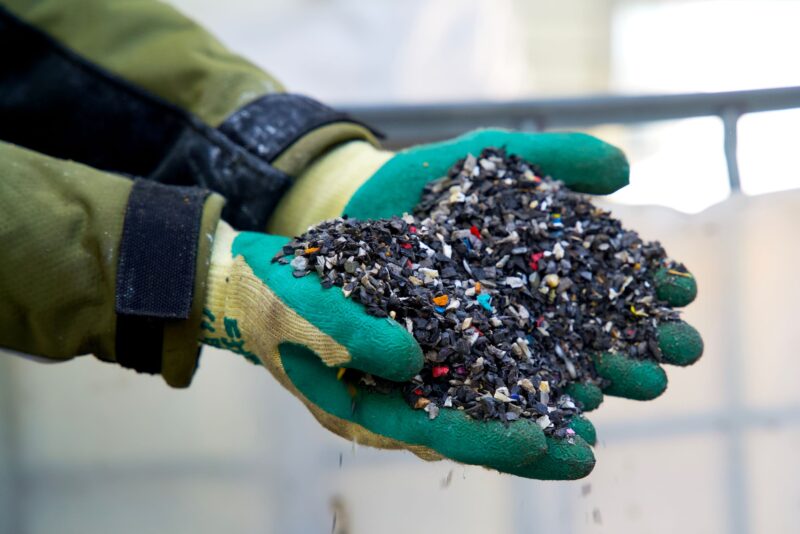
Our guiding principle is lifecycle thinking. Every product has an environmental footprint that starts with raw material sourcing and continues through manufacturing, integration into a product, use of the product, and end‑of‑life.
Composites already help reduce emissions and save resources during the use phase in many applications, because they’re lightweight, durable, and resistant to corrosion.
At the same time, we know the industry needs better answers for what happens before use (materials and sourcing) and after use (reuse and recycling).
That’s why we focus on:
- Enabling long‑lasting solutions that reduce resource use over time
- Reducing our footprint in operations and improving energy choices
- Lower‑impact materials and supply chains, where most of the footprint typically sits
- Circularity that starts with design, not only end‑of‑life treatment
We can’t do it alone: sustainability is about partnerships
Sustainability isn’t something one company can solve in isolation. Real progress depends on collaboration across the value chain, suppliers, customers, end users, recyclers, industry associations, regulators, and investors.
For composite products, a large share of the carbon footprint comes from raw materials and upstream activities, not only manufacturing operations. So at Exel we work with partners who share the same ambition and build practical solutions together, from material choices to recycling pathways.
You will see this partnership approach in many of our sustainability initiatives:
- Re-cycling projects that work at scale.
- Long‑term supplier collaboration on bio‑based and recycled materials.
- Industry programs and workgroups focused on circular design and circular value chains.
Learn more about our initiatives and partnerships below!

What our composites enable
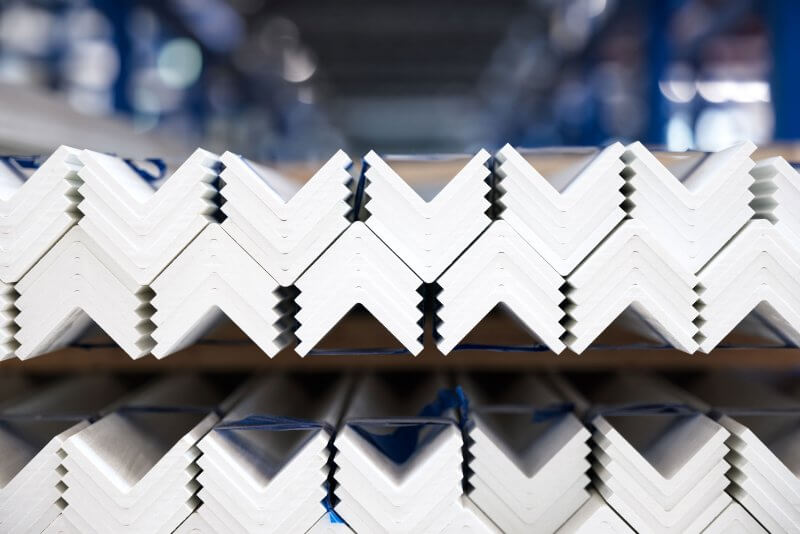
Composites are not single‑use materials, that you use once and throw away. They are typically used where high performance and long service life are required. Our composite solutions help enable applications that support the energy transition and more efficient infrastructure, for example:
- Wind energy: spar caps and root reinforcement
- Energy & electrical: conductor cores that support more efficient electricity transmission
- Mobility & transportation: lighter structures and components for buses, trains and trams
- Building & infrastructure: façades, and window & door profiles designed for long lifetime
We are proud of this enabling role, and we also know that the benefits are the strongest when we combine them with responsible sourcing, efficient manufacturing and credible end‑of‑life pathways.
Reducing our footprint in operations (Scope 1 & 2)
The emissions from our own operations come mainly from facilities, energy use and company vehicles — what the GHG Protocol describes as Scope 1 and Scope 2.
Our roadmap includes actions such as:
- Stepwise increasing the share of carbon‑neutral and renewable electricity globally. We are proud to state that as of summer 2026, all our European facilities are fully powered by renewable energy (wind, solar, hydropower and biomass).
- Investing in solar power at selected sites (with more planned).
- Improving energy efficiency in facilities and production
We’re also transparent about the reality that demand and 24/7 operations can increase energy use — so progress requires both efficiency and smarter energy choices.
The bigger impact: materials and supply chains (Scope 3)
For many composite products, the largest environmental impact is in raw materials and upstream activities (Scope 3). In our own assessments and costing-based footprint calculations, raw materials can represent around 80% of the footprint, with operations around 20% (order of magnitude, depending on product and material mix).
That’s why we focus heavily on:
- Choosing suppliers and materials with lower carbon intensity.
- Scaling bio‑based, recycled and renewable resin and fiber options.
- Improving transparency for customers by integrating carbon footprint considerations into our development and costing process.
Scope 3 is also a central focus area for the next phase of our sustainability journey, alongside circular design.
Circularity in practice: design, small loops, and scalable recycling
Circularity starts with design choices and efficient production, not only end-of-life treatment. And in composites, there is no single perfect solution. After use, products and materials can follow many different paths: they can be repaired or refurbished to extend service life, or returned and repurposed for other applications. This helps keep products and materials in use for longer before they reach end of life. When they do, multiple recycling and recovery methods need to coexist, because different composite materials require different routes to capture the most value.
Many of the most influential circularity decisions are made already at the design stage, affecting product lifetime, material choice, complexity, and future recyclability. We explore this perspective further in our article How rethinking design shapes the future of sustainability for composites, where Tiina Uotila discusses how circularity can be embedded into composite design from the very start.

Closing loops we can control
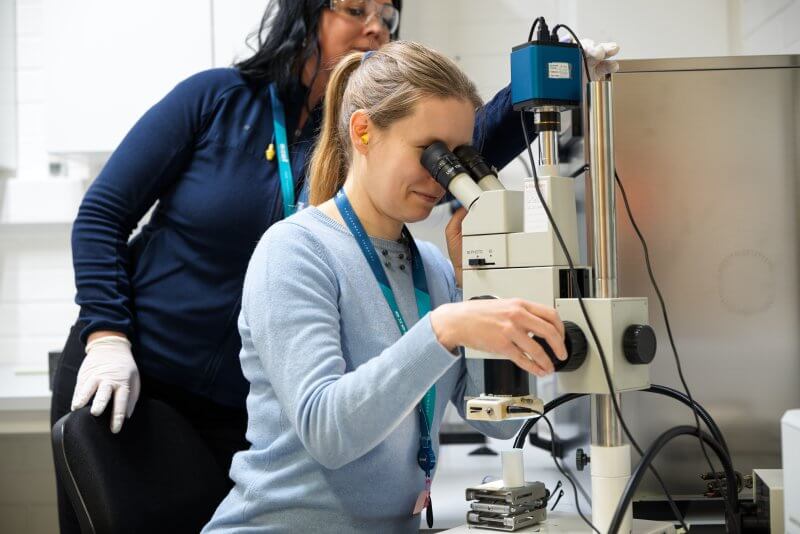
We also look for small loops along the value chain, including internal reuse of process waste. For example, the machining dust generated in our factories can be collected and reformed into solid composites, returning hundreds of tons of recovered material back into production pathways each year.

Keeping products in use longer
Most of our composite products are not painted or coated at the factory. Applying a coating can extend their usable lifetime, and recoating can help prolong it further for both appearance and durability. In many cases, small damage from daily use can also be repaired, helping keep products in service for longer.

Scalable recycling routes (today)
Cement co‑processing is an industrialised recycling pathway for glass‑fiber composites. It can handle large volumes of composite waste and enables both material and energy recovery in cement manufacturing. Learn more about our role in the Kimura project in Finland below.

Building toward more circular composite‑to‑composite pathways (tomorrow)
We also support the development of routes that can help keep materials in the composites value chain, including pilots and partnerships that explore mechanical and thermochemical recycling concepts.
Partnerships that scale impact
Partnerships are one of the most practical ways to scale sustainability, especially in a circular economy, where progress depends on many different players. We need to connect materials, manufacturing, use, and end-of-life across the value chain. Here are examples of our partnerships and collaborations that support circularity and lower‑footprint composites:
 KiMuRa (Finland): composite waste into cement clinker
KiMuRa (Finland): composite waste into cement clinker
We are a partner in the KiMuRa recycling route, which enables large-scale recycling of composite waste in Finland through cement co-processing. The model is designed as an open-loop pathway that can be applied across the industry, helping divert waste from landfill while reducing the need for virgin raw materials in cement production. The initiative also supports scaling industrial recycling capacity over time. Learn more about the KiMuRa project here.
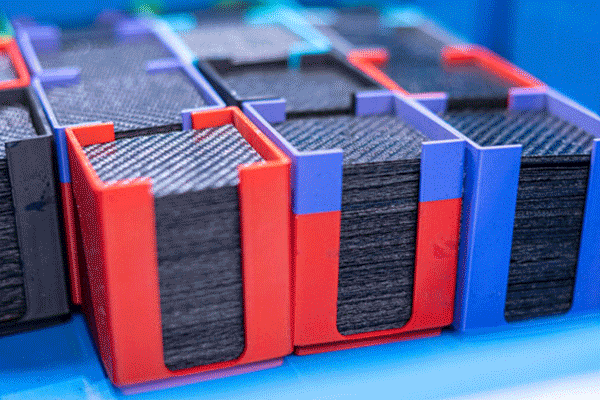 Fairmat: giving carbon fiber a second life
Fairmat: giving carbon fiber a second life
We have partnered with Fairmat to repurpose carbon fiber composite scrap into high-performance CFRP chips using a low-energy process. Material from our Finnish operations is processed at Fairmat’s facility in Nantes, helping reduce waste while extending the useful life of valuable fibers. The collaboration supports the development of more practical circular models. Learn more here.
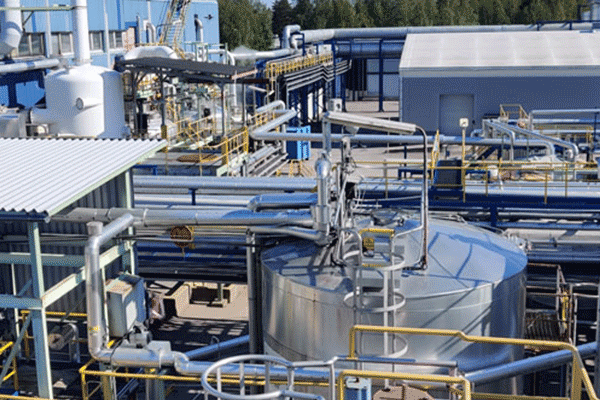 Bio‑based resins: scaling lower‑carbon options with suppliers
Bio‑based resins: scaling lower‑carbon options with suppliers
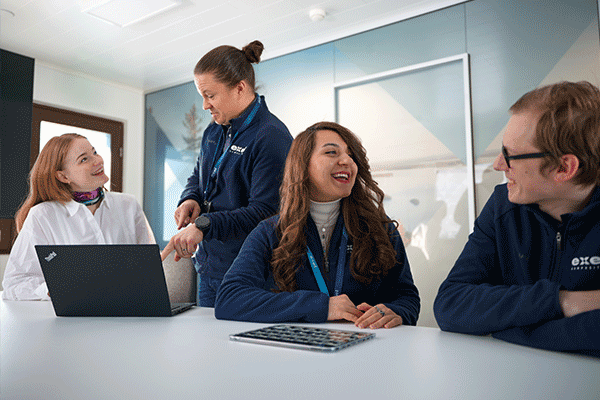 Industry collaboration: circular design and circular value chains
Industry collaboration: circular design and circular value chains
We also participate in industry initiatives focused on circular design and more sustainable value chains. This includes platforms such as the Nordic Circular Design Programme and the European Circular Composites Alliance, where we contribute to efforts to reduce waste and improve the collection and recycling of composite materials. Through these collaborations, we support broader progress across the industry.
Social responsibility and governance (ESG)
While sustainability is often discussed in environmental terms, it also includes social responsibility and governance. For us, ESG means running our business responsibly, ensuring safe and fair workplaces, ethical conduct, compliance, and transparent decision‑making, alongside reducing environmental impact. Sustainability is not just environmental. It also includes how we treat people and how we run our business, the social and governance parts.
Safety
Safety is a long‑standing priority for us, with a clear aim of zero harm and ongoing work to improve safe working practices.
Social responsibility
We work to create a safe, fair and inspiring environment for our people and to strengthen leadership and culture across our sites.
Governance and integrity
Responsible business conduct, compliance, and transparent reporting are essential foundations — and you’ll find more details in our Annual Report.


ESG transparency, reporting and external validation
Transparency is central to our ESG approach and to building trust with customers, partners, investors, and other stakeholders. We believe credibility comes from openness — including sharing what we’ve achieved and what still needs work.
Reporting platforms and third‑party assessments
In addition to our Annual Report, we report to several sustainability platforms used by customers and stakeholders, including CDP, EcoVadis, IntegrityNext, Sedex, and Assent. These assessments help drive continuous improvement and make our data more accessible to customers.
External audits and management systems
We maintain ISO management system certifications across Exel, including ISO 9001, ISO 14001, and ISO 45001 (and we align our social responsibility approach with ISO 26000, which is guidance and not certifiable). Visit our certification page here.
What we’re working on next
Sustainability is a journey and we’re focused on the next practical steps.
Our current focus includes:
- Building a stronger Scope 3 baseline and target setting (with 2025 as reference for the next phase)
- Expanding circular design and circular supply chains with customers and partners
- Scaling bio‑based, recycled and renewable materials across a broader share of products
- Improving customer transparency through tools such as carbon footprint calculators integrated into costing and development
Resources and further reading
- Annual Report: Learn more about our sustainability goals, actions, progress and governance
- Sustainability whitepaper: Download our free whitepaper for more insights
- Certificates and policies: (ISO certificates, policies, compliance)
- Customer cases and partnerships: Learn more about our customers and partners.
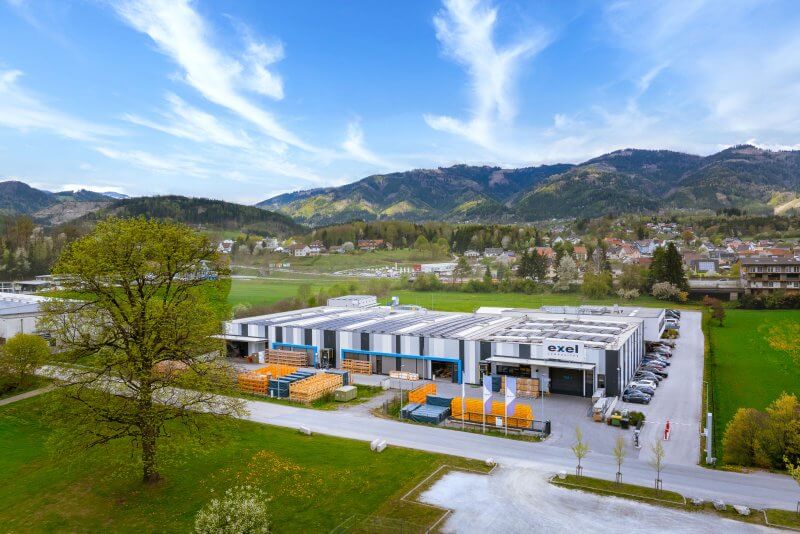
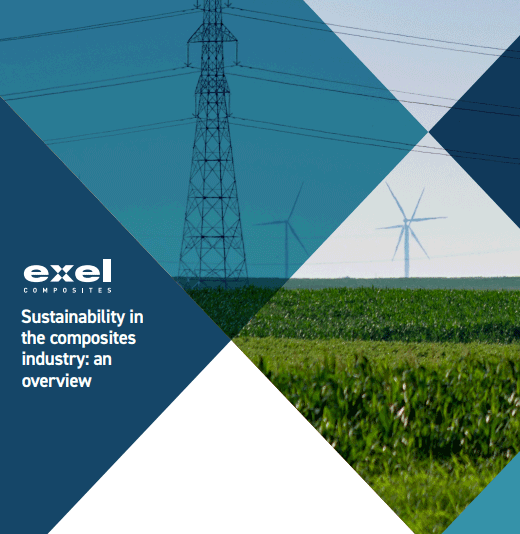
Download our free sustainability whitepaper
Composites offer long service life, durability and high performance, but the industry must also address circularity, raw material use and end-of-life solutions.
Download our whitepaper, “Sustainability in the composites industry: an overview,” to explore how lifecycle thinking, recycling, bio-based and recycled materials, and value-chain collaboration can support a more sustainable future for composites.
FAQs
Q1: What does ESG mean at Exel Composites?
At Exel Composites, ESG refers to how we manage environmental impact, social responsibility, and governance as part of our overall sustainability approach, supported by transparency, lifecycle thinking, and collaboration across the value chain.
Q2: How do you support customers’ ESG requirements?
We provide ESG‑related information through our sustainability reporting, external assessment platforms, and lifecycle data. We also work with customers on material choices and design decisions that support their ESG and reporting needs.
Q3: Where can I find verified ESG and sustainability information?
Our Annual Report is the primary source for verified ESG and sustainability information. We also report to external platforms such as CDP and EcoVadis, which are commonly used by customers and other stakeholders.
Q4: What does “lifecycle thinking” mean in composites?
It means we look at environmental impact across the full lifecycle: raw material sourcing, manufacturing, product use, and end‑of‑life, and we try to design solutions with the full picture in mind.
Q5: Why is circularity challenging for composites?
Composites are durable and made from multiple materials, which makes separation and recycling more complex, especially for hybrid structures. That’s why several recycling pathways need to develop in parallel.What recycling solutions exist today?
Q6: What composite recycling solutions exist today?
Cement co‑processing is already industrialized for glass‑fiber composites and can handle high volumes; other technologies, such as pyrolysis and chemical recycling, are advancing toward wider implementation.
Q7: Where does the biggest carbon footprint come from?
For many composite products, raw materials and upstream activities represent the largest share — often around 80% in order of magnitude, which is why supplier collaboration and material innovation are so important.